Reproducible Analytical Pipelines

...but are particularly useful for code in text files for example R or Python code. Whilst git can be used locally on a single machine, or many networked machines, git...
...but are particularly useful for code in text files for example R or Python code. Whilst git can be used locally on a single machine, or many networked machines, git...

...version in the first half of 2026. Over the next months, we’re: doing more user testing to understand what works well, areas for improvement, and how people are using the...

...welcome feedback on how they fit with existing systems, any implementation challenges, and areas where further development may be needed. Please send your feedback by 21 August 2026 to data-standards-authority@dsit.gov.uk...
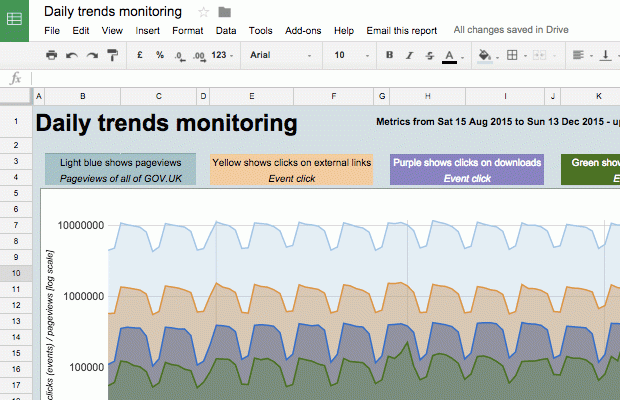
...to do this the first time you run it The script needs to be saved and authorised The code You can paste the code straight into the script editor window....
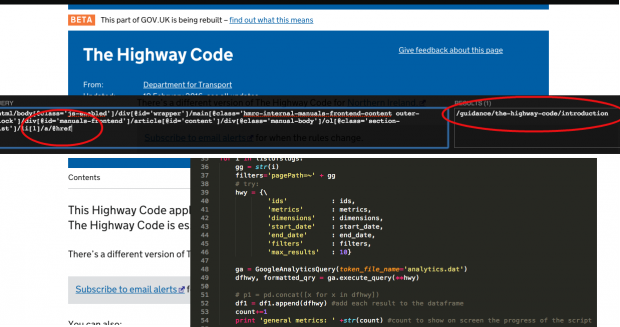
...of code working properly you can very quickly reuse the same code again, changing it to collect different metrics and dimensions. For example in the complete script I have quickly...

...and decision-making more transparent. Why use open source code for data analysis? To summarise many other articles on the benefits of using open source code for data analysis: Analyses and...
...code available as open source. One recommendation for the future is to continue to clearly separate out secure code and patterns from the wider code base to allow more code...
...having been done, as well as reasons for the service not having published the code yet, and plans in place to publish code over the coming months. The service manager...
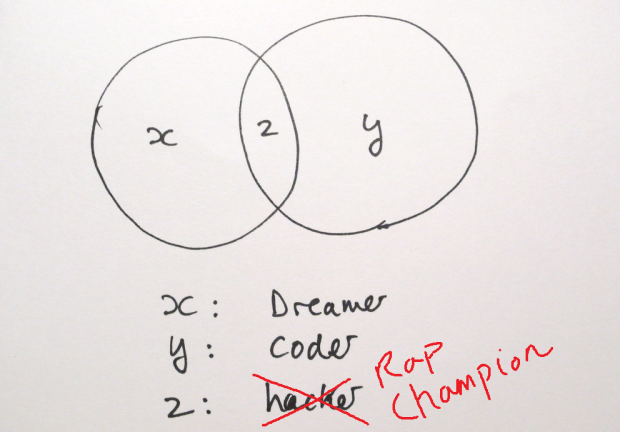
...source stuff. RAP is more than writing clean code To the person that wrote that RAP is a redefinition of documenting your code so that another person can read it,...
...checks within the code, but any sensitive code should be managed and kept private whilst all other code should, by default, be open source. We would particular urge the team...