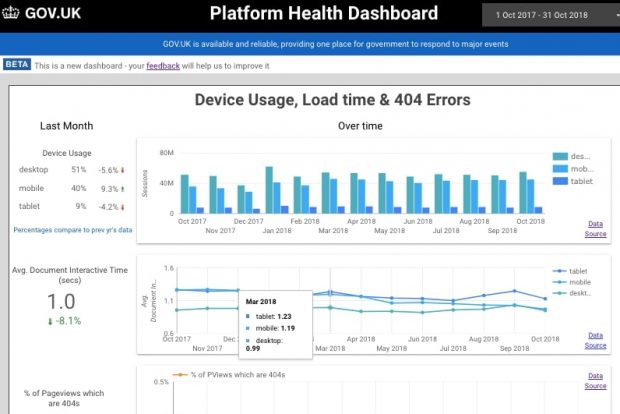
Data democratisation is a hot topic for analysts, so at the Government Digital Service we wanted to share how we’ve approached this by understanding teams’ user needs for data and what we’ve learned whilst working with these data sources.
Four years ago we redefined our role in GDS. Since then we've built an active community of practice across government and worked to build a 'data culture' within product teams. Find out what we've done and our plans for the next year.
We're using supervised machine learning to organise all the content on GOV.UK, which means we can do things like create step by step journeys and consider voice activation. Here's what the data science team did.
One of the questions the data science team at the Government Digital Service (GDS) often gets asked is ‘how does your team work on data science projects?’ We thought we’d blog about how we have evolved our approach to data …
Apply to the Data Science Accelerator programme by 15 October, and you could begin developing your data science skills before the end of 2018.
...UKHO is now building upon Chris’s code for their operational decision making by examining how cloud cover data could improve the processing of satellite imagery. Automatic categorisation and enhanced reporting...
The Data Science Accelerator programme is open again for applications until 12 June. Don’t miss out.
...and decision-making more transparent. Why use open source code for data analysis? To summarise many other articles on the benefits of using open source code for data analysis: Analyses and...
The Prime Minister has recently reaffirmed the government’s commitment to open data, and in particular to publishing various types of transparency data, in an open letter to cabinet. This includes...
...closer together. What we’ve learnt There is lots of interest in technical applications of data science, such as machine learning and artificial intelligence. But this isn’t matched with a clear...